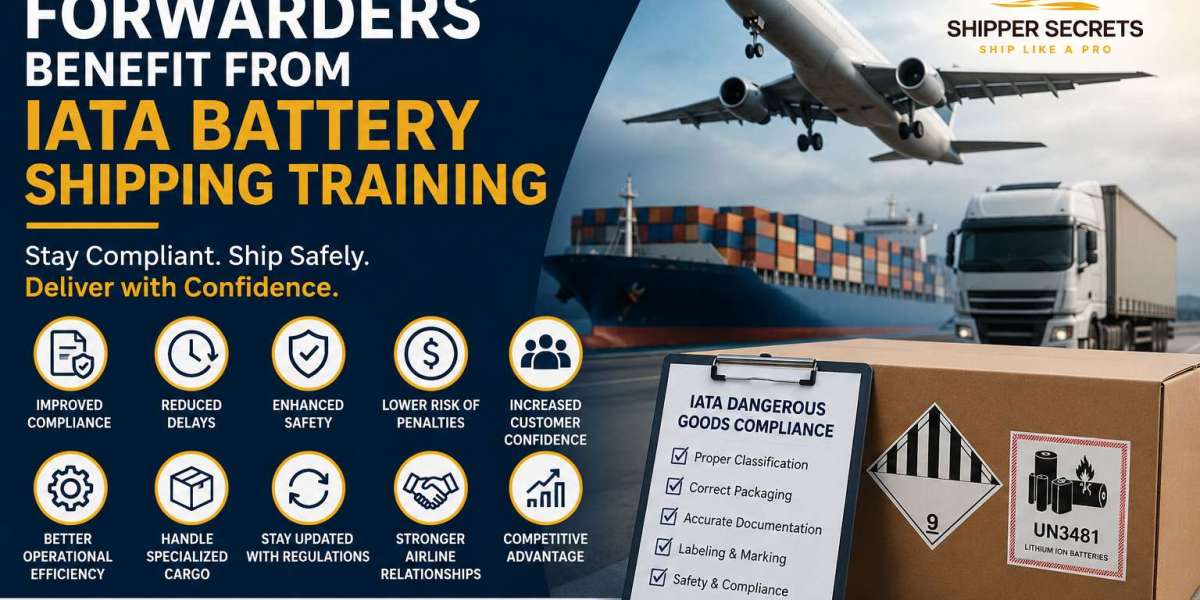

The global demand for lithium batteries continues to rise as industries rely on battery-powered products such as smartphones, laptops, medical devices, power tools, and electric vehicles. As a result, freight forwarders are increasingly responsible for managing shipments that contain lithium-ion and lithium metal batteries.
Because lithium batteries are classified as dangerous goods under air transport regulations, freight forwarders must understand and comply with strict shipping requirements. IATA Battery Shipping Training equips logistics professionals with the knowledge needed to handle battery shipments safely, efficiently, and in compliance with international regulations.
This article explores how freight forwarders benefit from IATA Battery Shipping Training and why it has become an essential investment in today's logistics industry.
?https://shorturl.at/zTrpz
Understanding the Role of Freight Forwarders
Freight forwarders act as intermediaries between shippers and transportation providers. Their responsibilities often include:
Coordinating domestic and international shipments
Preparing shipping documentation
Ensuring regulatory compliance
Managing customs requirements
Selecting transportation routes
Working with airlines and cargo carriers
Handling dangerous goods shipments
When lithium batteries are involved, even a minor compliance error can lead to shipment delays, rejected cargo, financial penalties, or safety risks.
What Is IATA Battery Shipping Training?
IATA Battery Shipping Training provides specialized instruction on the safe transport of lithium batteries by air. The training is based on the latest IATA Dangerous Goods Regulations (DGR) and covers:
Battery classification
UN numbers and packing instructions
Packaging requirements
Marking and labeling standards
Documentation procedures
State-of-charge requirements
Emergency response measures
Regulatory updates and compliance practices
The training helps freight forwarders understand how to prepare battery shipments correctly and avoid costly mistakes.
Key Benefits of IATA Battery Shipping Training for Freight Forwarders
1. Improved Regulatory Compliance
One of the biggest advantages of training is ensuring compliance with international air transport regulations.
Freight forwarders regularly manage shipments across multiple countries, each with specific dangerous goods requirements. Proper training helps employees understand:
IATA Dangerous Goods Regulations
ICAO Technical Instructions
Airline-specific requirements
Documentation standards
This reduces the likelihood of regulatory violations and cargo rejections.
2. Reduced Shipment Delays
Incorrect battery documentation or packaging is one of the leading causes of shipment delays.
Training enables freight forwarders to:
Verify battery classifications accurately
Apply correct labels and markings
Prepare documentation properly
Meet airline acceptance requirements
As a result, shipments move through the supply chain more efficiently.
3. Enhanced Workplace Safety
Lithium batteries can pose significant fire risks if damaged, improperly packaged, or mishandled.
IATA Battery Shipping Training teaches employees how to:
Identify hazardous battery shipments
Follow safe handling procedures
Recognize damaged or defective batteries
Implement emergency response measures
Improved safety protects employees, cargo, aircraft, and customers.
4. Lower Risk of Financial Penalties
Non-compliance with dangerous goods regulations can result in:
Regulatory fines
Shipment confiscation
Cargo delays
Increased insurance costs
Legal liabilities
Training significantly reduces these risks by ensuring employees understand and follow current regulations.|
?https://shippersecrets.com/bonded-warehousing/
5. Increased Customer Confidence
Customers trust freight forwarders to transport their goods safely and efficiently.
Companies that invest in battery shipping training demonstrate:
Professional expertise
Regulatory knowledge
Commitment to safety
Reliable shipping practices
This can improve customer retention and strengthen business relationships.
6. Better Operational Efficiency
Trained employees make fewer mistakes and process shipments more accurately.
Benefits include:
Faster shipment acceptance
Fewer documentation corrections
Reduced cargo rejections
Improved workflow efficiency
Better coordination with airlines
This helps freight forwarding companies reduce operational costs while increasing productivity.
7. Ability to Handle Specialized Cargo
Many businesses require freight forwarders capable of shipping:
Lithium-ion batteries
Lithium metal batteries
Medical equipment
Consumer electronics
Electric vehicle components
Industrial battery systems
IATA training allows freight forwarders to expand their service offerings and attract higher-value clients.
8. Staying Updated with Regulatory Changes
Battery transportation regulations evolve frequently as technology advances.
Training helps freight forwarders stay informed about:
New battery classifications
Updated packaging instructions
Labeling requirements
State-of-charge limitations
Emerging battery technologies
Remaining current helps companies avoid compliance gaps.
9. Stronger Relationships with Airlines
Airlines have strict dangerous goods acceptance procedures.
Freight forwarders with trained staff are more likely to:
Submit compliant shipments
Meet carrier requirements
Reduce shipment rejections
Build trust with airline partners
Strong carrier relationships can improve service reliability and shipping options.
10. Competitive Advantage in the Logistics Industry
As battery-powered products continue to dominate global markets, customers increasingly seek logistics providers with dangerous goods expertise.
IATA Battery Shipping Training allows freight forwarders to:
Differentiate themselves from competitors
Offer specialized services
Demonstrate compliance expertise
Win larger contracts
Access new market opportunities
Companies that invest in training often gain a significant competitive edge.
?https://shippersecrets.com/package-log/
Common Battery Shipping Errors Training Helps Prevent
Training helps freight forwarders avoid:
Incorrect UN number selection
Improper packaging
Missing lithium battery marks
Incomplete documentation
Incorrect dangerous goods declarations
Failure to follow state-of-charge requirements
Misclassification of battery-powered equipment
Preventing these errors improves both compliance and customer satisfaction.
The Future of Battery Logistics
The battery industry is expected to grow rapidly due to increasing demand for:
Electric vehicles
Renewable energy storage
Consumer electronics
Medical technology
Industrial automation
As battery shipments become more common, freight forwarders with specialized training will be better positioned to support growing customer needs while maintaining compliance and safety.
Conclusion
IATA Battery Shipping Training provides freight forwarders with the knowledge and skills needed to manage lithium battery shipments safely and efficiently. From improving regulatory compliance and workplace safety to reducing shipment delays and expanding business opportunities, the benefits are substantial.
As battery transportation regulations continue to evolve, investing in training is one of the most effective ways freight forwarders can strengthen operations, protect their business, and deliver greater value to customers.
? Contact Us Today!
? 868 Cardiff Road, Naperville, IL 60565
☎️ 708.275.8418